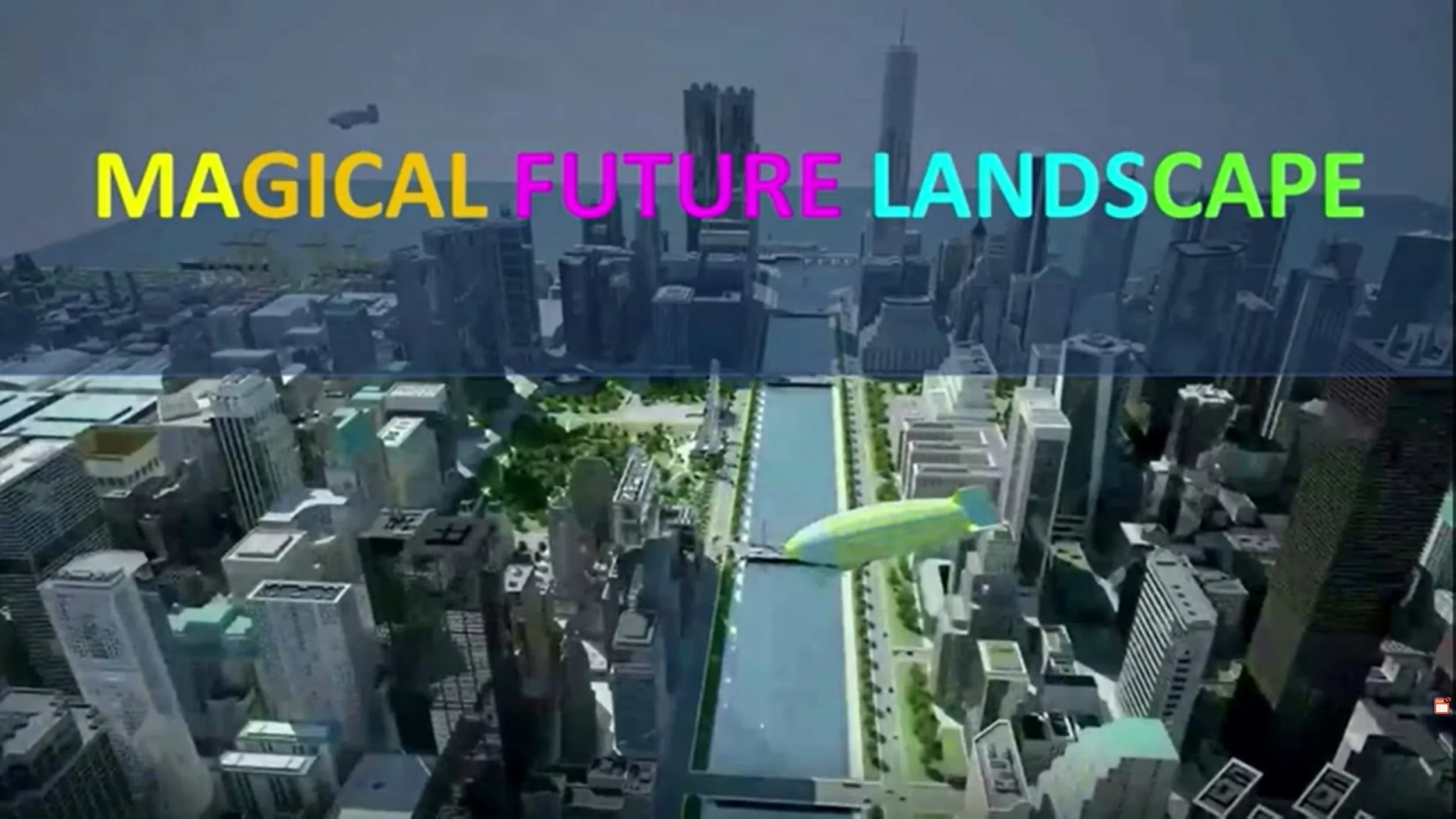
CREATIVITY IN ACTION - The Magical Future Landscape-Higher Education
This course is designed specifically for university students and provides valuable insights applicable to all levels of education.
This document represents a compelling Master's Thesis in Art Education authored by Professor Luis A. Garay, who holds both an MFA and an MA Ed. from the renowned Academy of Art University.
1. MISSION STATEMENT AND PHILOSOPHY
MISSION STATEMENT
The magical future landscape is a creative program for university students. The objective is to paint or build from the real to an imaginary landscape in 2D, or 3D dimensions using imagination and playing with harmonic and contrast colors in the composition to create illusion and visual magic in the viewer. The student using the technology can publish and exhibit them in the virtual university gallery. The program expects students to interact with their communities with futuristic projections promoting knowledge, lifelong learning, critical and reflective thinking.
PHILOSOPHY STATEMENT
In the program, the traditional, constructivist, and Progressive philosophies promote creativity and self-expression in creating authentic and self-actualized individuals. I teach with love, good humor, trust, and hope in the students for an excellent future.
2. GOALS AND OBJECTIVES OF PROGRAM
CORE VALUES
• Creativity in action
• Exploration - Knowledge
• Connections
MAIN GOAL
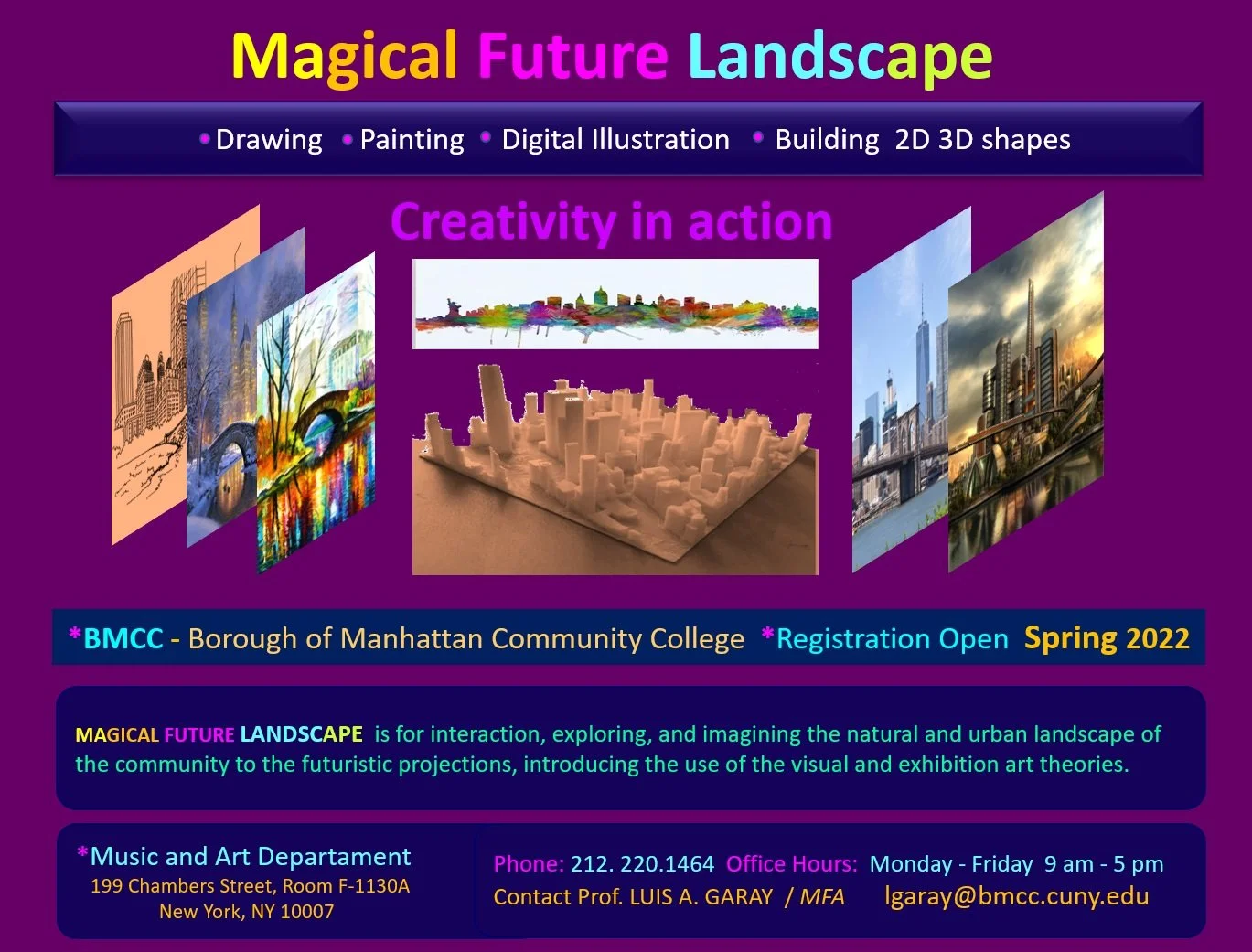
The main goal of Magical Future Landscape is to interact, explore, imagine, create and paint or build in 2D or 3D dimensions the natural and urban landscape of the community to futuristic projections. You will use visual and exhibition art theories to create futuristic illusion and visual magic in the viewer while fostering a greater understanding and appreciation of the arts.
OBJECTIVES
Students will:
• Create and Paint, or build a futuristic landscape in 2D or 3D dimensions using harmonic colors and contrasts.
• Play with the theory of harmony colors in the creation of the primary sketches.
• Interact with the natural and urban landscape of their communities and with group and individual in class.
3. MISSION STATEMENT AND PHILOSOPHY
C U R R I C U L U M
Timeline: Structure / 3 hours per class during 15 weeks-1 Semester
9:00 - 10:00 - LECTURE: Whole Students Group to do Discussion & Challenges of the topic.
10:00 - 11:30 - ACTIVITY/PRACTICE: Students Group Creative Exploration about the topic.
11:30 - 12:00 - SELF EVALUATION: Whole Students Group Reflection about Discussion, Challenge, and Creative Exploration about their artworks.
-
-
Lesson 1: Week 1 - Landscape Introduction
LECTURE: History of Landscape in the arts
ACTIVITY/PRACTICE: Design-painting or build a free Landscape/w/o references or imagination
SELF EVALUATION: Analyze the students' visual perception and imagination
LECTURE: History of Landscape in the arts
ACTIVITY/PRACTICE: Design-painting or build a free Landscape/w/o references or imagination
SELF EVALUATION: Analyze the students' visual perception and imagination
-
Lesson 2: Developing a Practice Plan
We break things down into simple, manageable parts so you never feel overwhelmed.
We break things down into simple, manageable parts so you never feel overwhelmed.
-
-
-
Lesson 1: Week 2 Natural vs. Urban landscape.
LECTURE: Brief American & World History / visiting Streets and parks on place
ACTIVITY/PRACTICE: Design-painting or build a free urban & nature Landscape/w/o references or imagination
SELF EVALUATION: Analyze the shapes and colors of the landscapes. Differences
LECTURE: Brief American & World History / visiting Streets and parks on place
ACTIVITY/PRACTICE: Design-painting or build a free urban & nature Landscape/w/o references or imagination
SELF EVALUATION: Analyze the shapes and colors of the landscapes. Differences
-
-
-
Lesson 1: Week 3- Imagination of landscapes.
LECTURE: Brief American & World History / visiting The Metropolitan Museum NY
ACTIVITY/PRACTICE: Design-painting or build a free urban or nature Landscape from 5 pictures references taken in class
SELF EVALUATION: Analyze shapes and colors from landscapes. Make Differences
LECTURE: Brief American & World History / visiting The Metropolitan Museum NY
ACTIVITY/PRACTICE: Design-painting or build a free urban or nature Landscape from 5 pictures references taken in class
SELF EVALUATION: Analyze shapes and colors from landscapes. Make Differences
-
Lesson 2: Dedveloping a Practice Plan
We break things down into simple, manageable parts so you never feel overwhelmed.
We break things down into simple, manageable parts so you never feel overwhelmed.
-
-
-
Lesson 1: Week 4 Atmosphere, space in landscapes.
LECTURE: Atmosphere, dimensions & space theory / visiting Liberty Statue & Staten Island
ACTIVITY/PRACTICE: Design-painting or building sketches from the urban or natural landscapes pictures taken in class.
SELF EVALUATION: Analyze the dimensions and atmosphere colors of landscapes. Differences
LECTURE: Atmosphere, dimensions & space theory / visiting Liberty Statue & Staten Island
ACTIVITY/PRACTICE: Design-painting or building sketches from the urban or natural landscapes pictures taken in class.
SELF EVALUATION: Analyze the dimensions and atmosphere colors of landscapes. Differences
-
-
-
Lesson 1: Week 5 - Lines and shapes in landscapes.
LECTURE: Lines and shapes in landscapes theory / visiting The Empire State Building
ACTIVITY/PRACTICE: Design or build a free Landscape from 5 references of the visited place.
SELF EVALUATION: Analyze lines & shapes of the landscapes. Differences
LECTURE: Lines and shapes in landscapes theory / visiting The Empire State Building
ACTIVITY/PRACTICE: Design or build a free Landscape from 5 references of the visited place.
SELF EVALUATION: Analyze lines & shapes of the landscapes. Differences
-
What You'll Learn
Expert-Backed Content
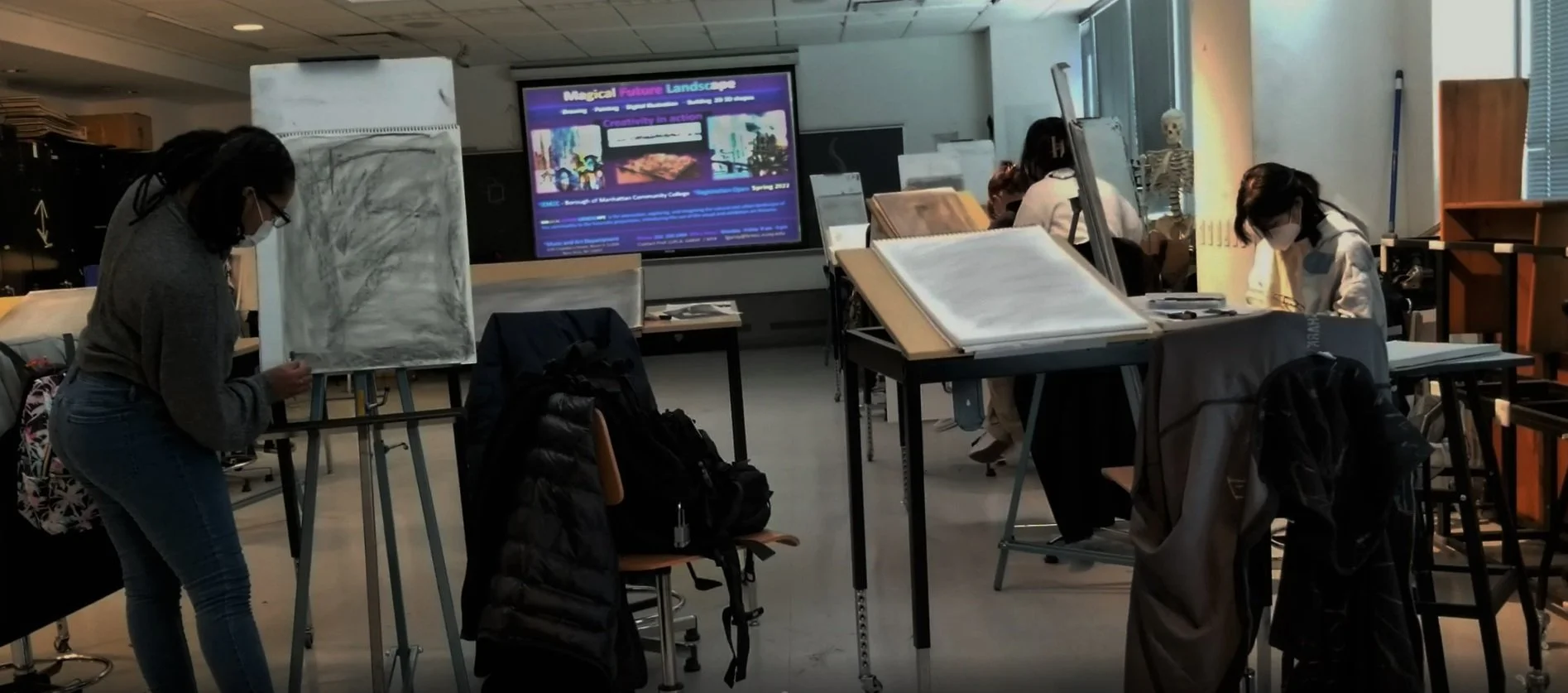
We break things down into simple, manageable parts so you never feel overwhelmed. As you progress, you’ll develop both skill and self-assurance, one step at a time.
CREATIVITY IN ACTION
This course is designed specifically for university students and provides valuable insights applicable to all levels of education.
1. Mission Statement and philosophy
2. Goals and Objectives of Program - Who, What, Where, How
3. Abstract of curriculum ideas
4. Team Description
5. Pitch including Marketing and Promotional Ideas
6. Fundraising Plan
Build Confidence
Each lesson is designed to equip you with useful strategies you can immediately put into action. It’s about learning with purpose and seeing real results.
Gain Practical Tools
2. GOALS AND OBJECTIVES OF PROGRAM
CORE VALUES
• Creativity in actio
• Exploration - Knowledge
• Connections
MAIN GOAL
The main goal of Magical Future Landscape is to interact, explore, imagine, create and paint or build in 2D or 3D dimensions the natural and urban landscape of the community to futuristic projections. You will use visual and exhibition art theories to create futuristic illusion and visual magic in the viewer while fostering a greater understanding and appreciation of the arts.
OBJECTIVES
Students will:
• Create and Paint, or build a futuristic landscape in 2D or 3D dimensions using harmonic colors and contrasts.
• Play with the theory of harmony colors in the creation of the primary sketches.
• Interact with the natural and urban landscape of their communities and with group and individual in class.
5. PITCH INCLUDING MARKETING AND PROMOTIONAL IDEA
6. FUNDRAISING PLAN
The program will be funded with the contribution of
sponsors, partnerships, donators and grants.
Monet Goode, Instructor

Through thoughtful examples and guided exploration, you'll learn to approach obstacles with fresh eyes. This course is about unlocking flexibility, not following formulas.
1. MISSION STATEMENT AND PHILOSOPHY
The Magical Future Landscape
MISSION STATEMENT
The magical future landscape is a creative program for university students. The objective is to paint or build from the real to an imaginary landscape in 2D, or 3D dimensions using imagination and playing with harmonic and contrast colors in the composition to create illusion and visual magic in the viewer. The student using the technology can publish and exhibit them in the virtual university gallery. The program expects students to interact with their communities with futuristic projections promoting knowledge, lifelong learning, critical and reflective thinking.
PHILOSOPHY STATEMENT
In the program, the traditional, constructivist, and Progressive philosophies promote creativity and self-expression in creating authentic and self-actualized individuals. I teach with love, good humor, trust, and hope in the students for an excellent future.
Learn New Approaches
Whether you're starting out or revisiting the basics, you'll solidify core concepts while expanding into new territory. There’s room here to both grow and go deeper.
3. MISSION STATEMENT AND PHILOSOPHY
C U R R I C U L U M
Timeline: Structure / 3 hours per class during 15 weeks-1 Semester
9:00 - 10:00 - LECTURE: Whole Students Group to do Discussion & Challenges of the topic.
10:00 - 11:30 - ACTIVITY/PRACTICE: Students Group Creative Exploration about the topic.
11:30 - 12:00 - SELF EVALUATION: Whole Students Group Reflection about Discussion, Challenge, and Creative Exploration about their artworks.
Week 1 - "Landscape Introduction"
LECTURE: History of Landscape in the arts
ACTIVITY/PRACTICE: Design-painting or build a free Landscape/w/o references or imagination
SELF EVALUATION: Analyze the students' visual perception and imagination
Week 2 - "Natural vs. Urban landscape."
LECTURE: Brief American & World History / visiting Streets and parks on place
ACTIVITY/PRACTICE: Design-painting or build a free urban & nature Landscape/w/o references or imagination
SELF EVALUATION: Analyze the shapes and colors of the landscapes. Differences
Week 3 - "Imagination of landscapes."
LECTURE: Brief American & World History / visiting The Metropolitan Museum NY
ACTIVITY/PRACTICE: Design-painting or build a free urban or nature Landscape from 5 pictures references taken in class
SELF EVALUATION: Analyze shapes and colors from landscapes. Make Differences
Week 4 - "Atmosphere, space in landscapes."
LECTURE: Atmosphere, dimensions & space theory / visiting Liberty Statue & Staten Island
ACTIVITY/PRACTICE: Design-painting or building sketches from the urban or natural landscapes pictures taken in class.
SELF EVALUATION: Analyze the dimensions and atmosphere colors of landscapes. Differences
Week 5 - "Lines and shapes in landscapes."
LECTURE: Lines and shapes in landscapes theory / visiting The Empire State Building
ACTIVITY/PRACTICE: Design or build a free Landscape from 5 references of the visited place.
SELF EVALUATION: Analyze lines & shapes of the landscapes. Differences
Week 6 - "Perspective 1 point view."
Week 7 - "Perspective 2,3 point of view."
Week 8 - "Harmony of Color"
Week 9 - "Golden area."
Week 10 - "Textures and shapes transformations from real to imagination."
Week 11 - "Urban and nature Landscapes details transformation."
Week 12 - "Nature landscape details transformation."
Week 13 - "Draft of urban or nature landscape 1."
Week 14 - "Draft of urban or nature landscape 2."
Week 15 - "Artwork presentations, critics, and exhibition."
Portfolio presentation. Selection of 10-12 artworks
Strengthen Your Foundation
4. TEAM DESCRIPTIONS
TEAM
SIMON CARR
Simon Carr is an artist and educator. He is an artist with a long history of exhibiting art in New York art galleries and internationally. The artist is an excellent professor of drawing and painting. He is also a former chair and currently Deputy chairperson of the art and music department at the Borough of Manhattan Community College of CUNY.
Professor Carr was guiding and mentoring the curriculum structure in the Magical future Landscape program.
EMAIL: scarr@bmcc.cuny.edu
LUIS A. GARAY-BUSTAMANTE
Luis A. Garay-Bustamante is an Art & Media Communication student at Brooklyn Tech High School- Honor Program. At six years of age, he did an important art exhibition in the great Marlborough Gallery in New York City. Garay-Bustamante will be recording the lessons and visual material for the Magical Future Landscape program.
EMAIL: gbbdt@yahoo.com
Strengthen Your Foundation